The Numbers Game Is Rigged — And the House Always Wins
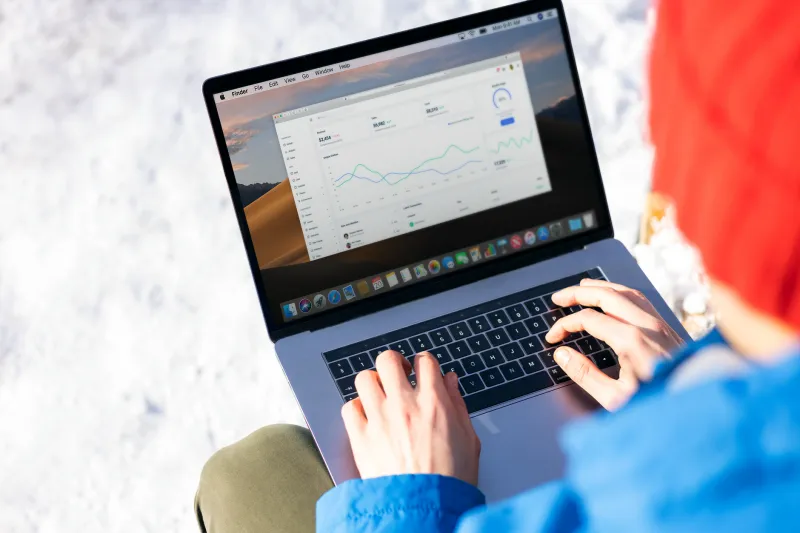
The Dashboard That Never Lets You Win
You open the app. You check the numbers. Maybe they're up a little, maybe they're down a lot — but either way, within about thirty seconds, you feel some version of not enough. Sound familiar?
That feeling isn't an accident. It's a feature.
The metrics we've all been trained to obsess over — follower counts, view totals, engagement rates, reach, impressions — weren't built to help you understand your creative impact. They were built to keep you glued to a platform that profits from your attention and your anxiety. The moment you start treating those numbers like a report card on your worth as a creator, you've already handed over more power than you realize.
Let's slow down and actually look at what's happening here, because once you see it, you can't unsee it.
Manufactured Scarcity in a Supposedly Infinite Space
Here's the wild irony of the creator economy: the internet is theoretically infinite. There's no physical shelf space running out, no limited broadcast window, no geographic ceiling on who can find your work. And yet somehow, platforms have managed to make creators feel like they're all competing for the same tiny slice of a shrinking pie.
That's not organic. That's engineered.
Algorithms are built to surface certain content and suppress other content — not necessarily based on quality, but based on what drives the most platform-specific behavior. A video that sparks outrage or triggers a dopamine spike gets pushed. A thoughtful, slow-burn piece of work that genuinely changes how someone thinks? It might barely register in the metrics, even if it's the most valuable thing someone watches all week.
When your numbers don't reflect that kind of impact, the platform isn't telling you that your work failed. It's telling you that your work didn't serve the platform's engagement model. Those are two completely different things — and conflating them is exactly what keeps creators stuck.
The Psychology Behind Metric Addiction
There's real science behind why we can't stop checking. Variable reward schedules — the same psychological mechanism that makes slot machines so effective — are baked into every social platform. You never know if the next refresh will show a spike or a drop, and that uncertainty is neurologically compelling in a way that's genuinely hard to override.
Add to that the deeply human need for social validation, and you've got a recipe for a feedback loop that has nothing to do with your actual creative goals. You start making decisions not based on what you want to create, but based on what the numbers seemed to reward last time. You start reverse-engineering your own voice to fit a metric.
And here's the thing — that's not weakness. That's just being human in an environment specifically designed to exploit human psychology. The creators who are most at risk aren't the ones who don't care about their work. They're the ones who care deeply, because caring deeply makes the numbers feel like they mean more than they do.
What the Metrics Don't — and Can't — Measure
Let's talk about what never shows up in your analytics dashboard.
The person who found your work during a hard season of their life and felt less alone. The idea you sparked in someone else's head that led to something you'll never know about. The slow, compounding trust you're building with a small audience that actually reads every word. The creative muscle you're developing by showing up consistently, even when the numbers are flat.
None of that registers as a data point. None of it trends. None of it shows up in the week-over-week comparison chart that platforms love to surface right when you're feeling most vulnerable.
But ask any creator who's built something genuinely lasting, and they'll tell you — the stuff that doesn't show up in the metrics is often the stuff that mattered most.
Building Your Own Scoreboard
This isn't about ignoring metrics entirely. Data has real utility when you're trying to understand what's resonating, refine your approach, or make a case to a brand partner. The goal isn't to be naive about numbers — it's to stop letting someone else's scoreboard define your sense of progress.
So what does your own scoreboard look like? That's actually worth sitting down and figuring out, intentionally, before you open the app again.
A few questions worth asking yourself:
What does success actually feel like in your body? Not the number that would make you feel successful — the actual experience. Is it creative freedom? Financial stability? A specific kind of community? Getting clear on the feeling helps you trace it back to real-world indicators that aren't platform-dependent.
What metrics are actually connected to your goals? If you're trying to build a consulting practice, email list growth probably matters more than TikTok views. If you're trying to license your photography, the quality of your portfolio matters more than your Instagram follower count. Match your metrics to your actual objectives, not to what the platform makes most visible.
Who are the ten people you most want to reach? Seriously — ten specific types of people. If those people found your work this week, would you call it a win regardless of what the overall numbers said? For most creators, the answer is yes. That tells you something important about where your real metric should live.
The False Hierarchy Problem
One of the most damaging things about platform metrics is that they create a visible social hierarchy among creators — and that hierarchy has almost nothing to do with quality, craft, or genuine impact.
A creator with 2 million followers isn't necessarily doing more valuable work than a creator with 8,000. They've just figured out, or gotten lucky with, what the algorithm rewards. Those are different skills. Neither one is inherently more or less worthy of respect.
But when we can see the numbers, we can't help but use them as a proxy for merit — even when we know better. It's the same reason people assume a bestselling book is better than a critically praised one that didn't sell as well. The number becomes the shorthand for value, and the shorthand is almost always wrong in the specific case.
Recognizing this false hierarchy isn't just good for your mental health. It's actually a competitive advantage. When you stop deferring to follower counts as a measure of who's worth learning from or collaborating with, you start seeing the whole landscape more clearly — and you find people doing genuinely interesting work that the algorithm just hasn't gotten around to amplifying yet.
Play the Long Game the Platform Can't See
The creators who tend to build something durable aren't the ones who cracked the code on any given platform's algorithm. They're the ones who stayed focused on the work itself long enough that the work started to do things no algorithm could fully predict or control.
That's not a passive strategy. It takes real discipline to keep showing up for a creative vision when the metrics are telling you a different story. It means building a relationship with your own judgment that's stronger than your relationship with the dashboard.
But that's also exactly the kind of thing that can't be manufactured at scale, which means it's one of the few genuine edges still available in a crowded creative landscape.
The numbers game is rigged. The house always wins — unless you decide you're playing a different game entirely.